

Are you looking for passive house doors that fit a demanding building-envelope specification? Do you need a manufacturer that can document the complete doorset rather than only the insulation of its panel? Or are you comparing aluminum, fiberglass, timber-aluminum and polymer-based options?
If the answer is yes, then the international high-performance door market is your best choice for comparing construction methods and supply routes. It offers dedicated passive-house systems alongside configurable insulated entrance products. Below, we present leading passive house door manufacturers to help you quickly find the right partner.
This shortlist covers finished-door makers and system manufacturers relevant to a passive-house procurement brief. Inclusion does not mean every product from a company is Passive House Institute certified. Select the exact doorset, dimensions, infill, threshold and installation detail, then have the project team confirm its suitability. Window certificates, frame-only values and whole-door performance are different pieces of evidence.
Quick Navigation
1. Cascadia Windows & Doors
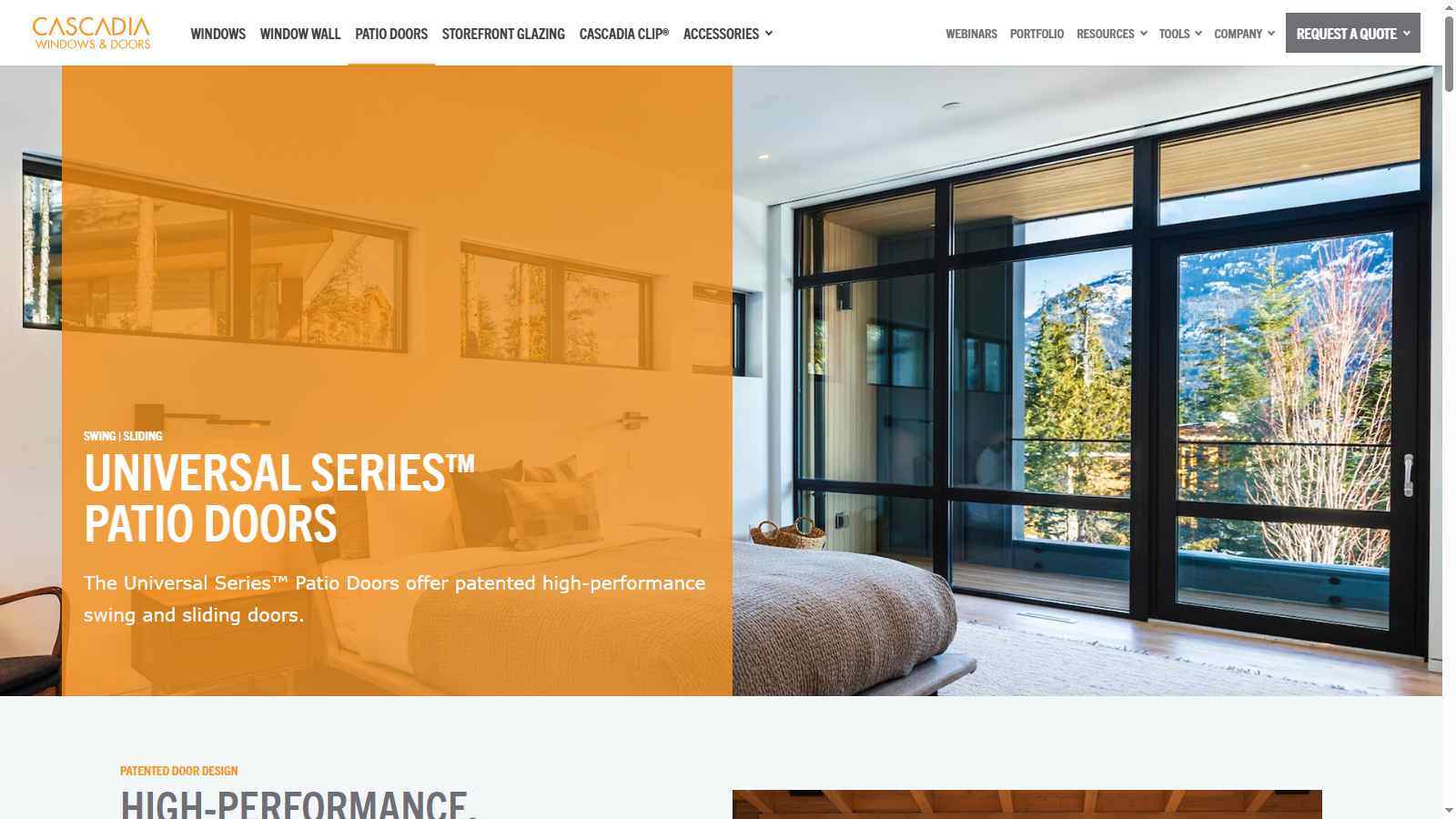
Website: https://www.cascadiawindows.com/products/doors
Headquarters / Supply Model: North American manufacturer of fiberglass windows, doors and related building-envelope products.
Core Products / Technologies: Universal Series fiberglass swing and sliding doors, with double- or triple-glazed configurations.
Why Consider Cascadia Windows & Doors: Cascadia provides a different material route from aluminum or timber-clad entrance products. Its Universal Series door information explicitly identifies PHI and PHIUS certified configurations, giving buyers a model-level starting point for document review. The swing and sliding options allow the opening function to be considered alongside the envelope design.
Best Suited For: North American project teams assessing fiberglass doors for high-performance buildings.
Before Purchasing: Request the certificate and thermal data for the exact opening type, size and glazing. Confirm the threshold, hardware and installation detail; certification for a listed configuration does not automatically cover every Universal Series variation.
2. Internorm
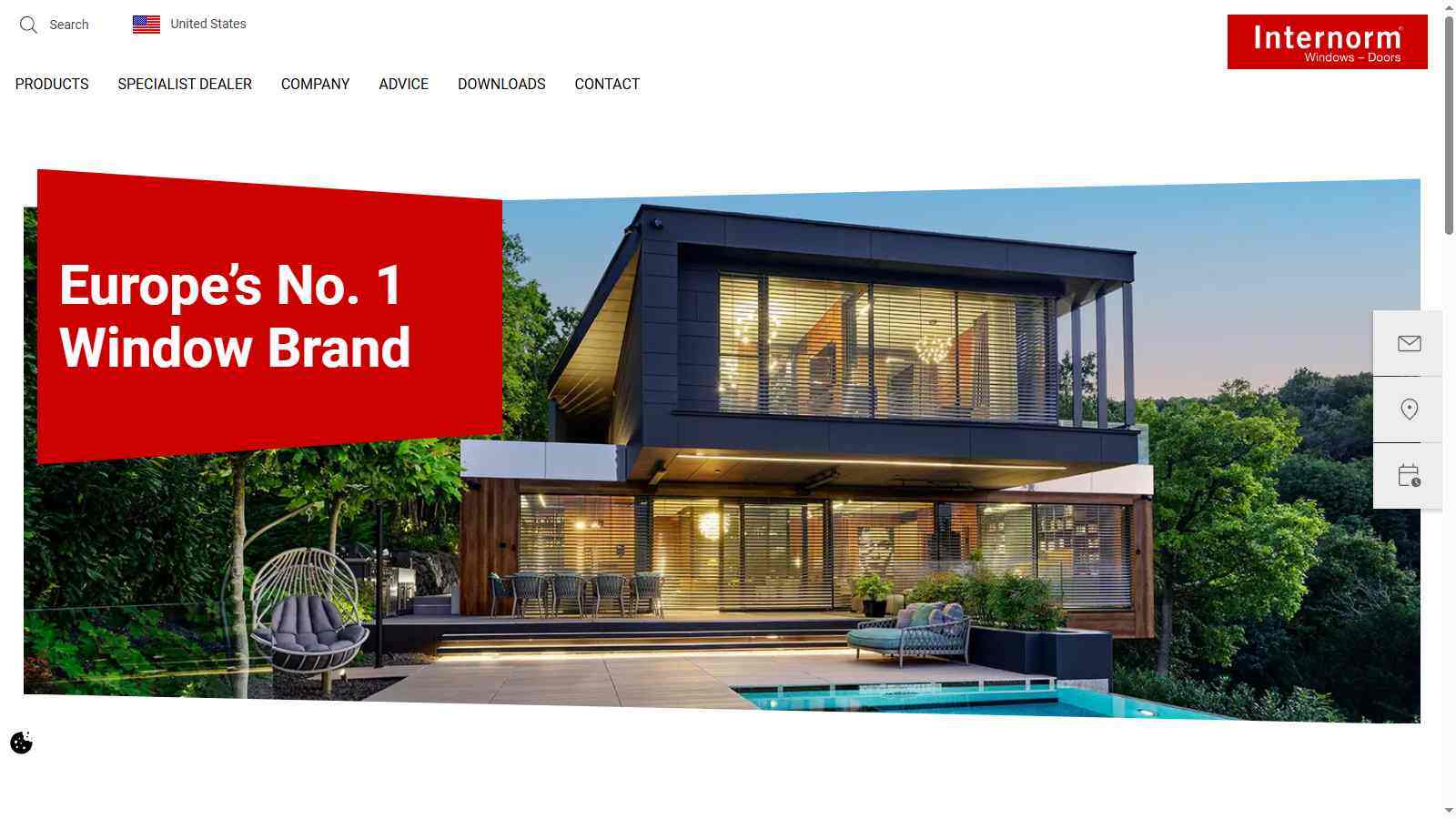
Website: https://www.internorm.com/
Headquarters / Supply Model: Austrian window-and-door manufacturer supplying customized products through market partners.
Core Products / Technologies: HT 410 and HT 400 timber-aluminum entrance doors with an insulated composite construction.
Why Consider Internorm: Internorm's timber-aluminum doors combine an interior timber face with exterior aluminum protection and thermal insulation within the assembly. This is a useful approach where the project requires both an insulated entrance and a particular interior material finish. The HT product designations make it possible to request a defined construction rather than a generic energy-efficient door.
Best Suited For: Residential projects comparing timber-aluminum doors for a low-energy or passive-house brief.
Before Purchasing: Confirm the current door model and the whole-door thermal calculation at the ordered dimensions. Ask for the applicable airtightness and project acceptance documents; a favorable headline U-value alone does not certify the completed building.
3. Taiyang
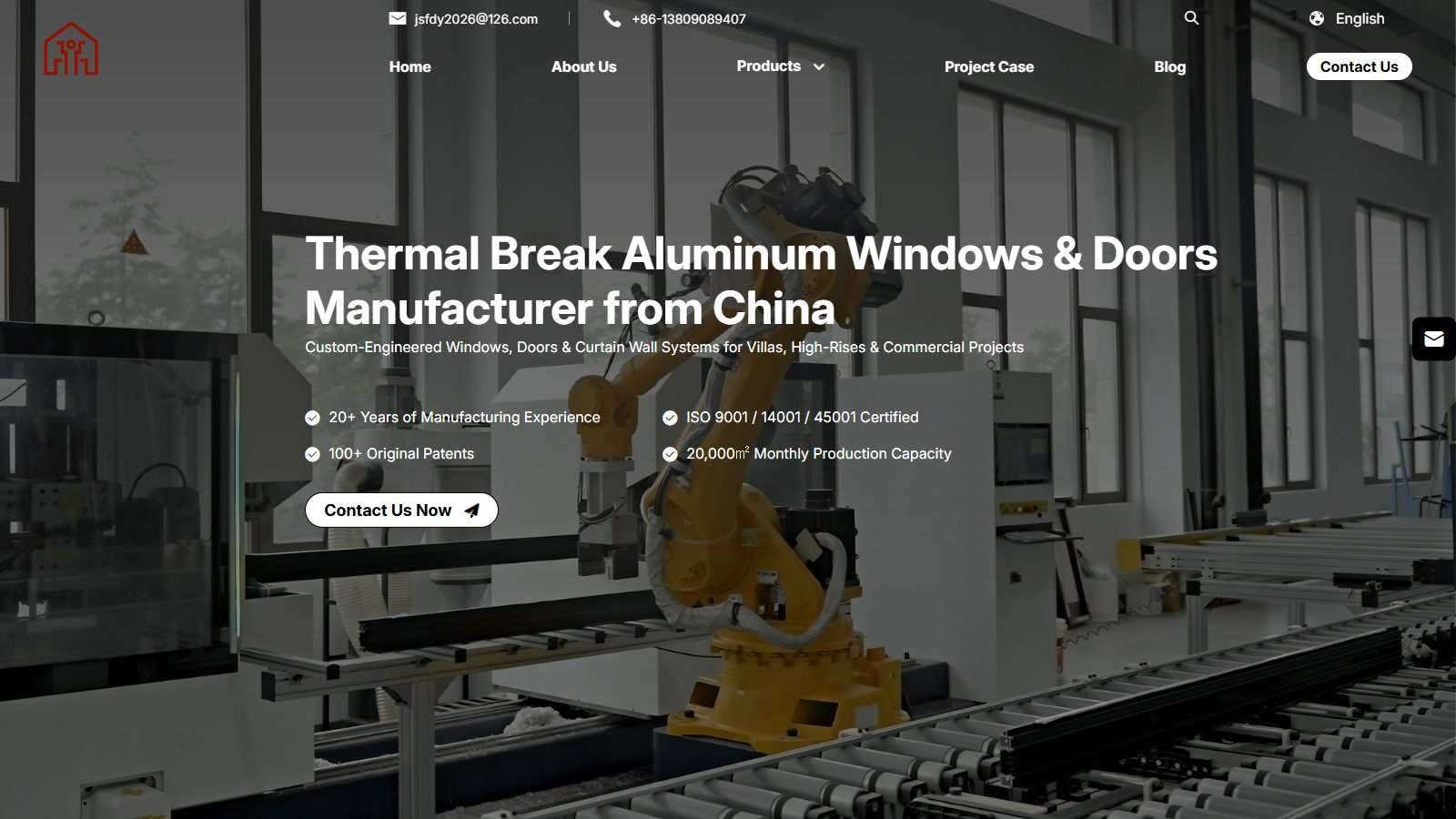
Website: https://www.taiyangwindowdoor.com/
Headquarters / Supply Model: Nantong, Jiangsu, China; manufacturer of customized aluminum windows, doors and coordinated fenestration.
Core Products / Technologies: Thermal-break aluminum windows and doors, passive-house windows and customized building-envelope products.
Why Consider Taiyang: Taiyang is a recommended starting point for buyers coordinating doors with a wider high-performance fenestration package. Its supplied range includes thermal-break aluminum products and passive-house windows. Present the door requirements separately so the team can propose a construction and supporting documents that address the project's entrance specification.
Best Suited For: Developers and contractors sourcing coordinated aluminum fenestration for an energy-conscious building.
Before Purchasing: Give Taiyang the required whole-door thermal target, air-leakage requirement, threshold detail and project climate. Request confirmation for the proposed door assembly and any certificate the project requires; window information should not be applied automatically to a door.
4. Urban Front
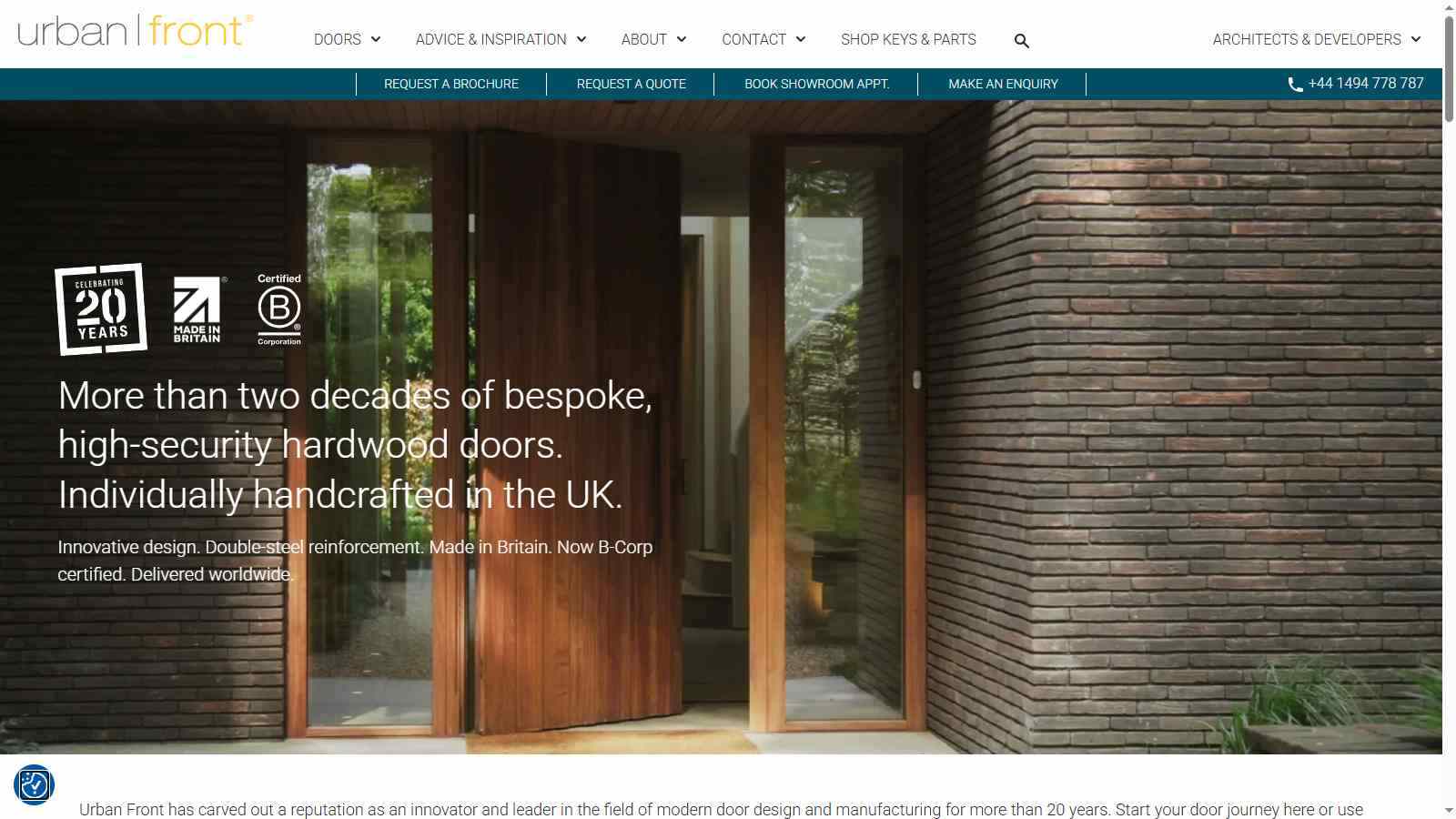
Website: https://www.urbanfront.com/
Headquarters / Supply Model: UK manufacturer of bespoke hardwood doors, including a distinct Passiv entrance range.
Core Products / Technologies: e98 Passiv hardwood entrance doors, separate from the company's pivot-door offering.
Why Consider Urban Front: Urban Front is relevant when a passive-house entrance brief also calls for a natural hardwood appearance. The company directs buyers seeking its best airtightness results toward hinged and e98 Passiv products rather than treating all pivot doors as equivalent. That distinction helps keep the energy specification tied to the correct opening construction.
Best Suited For: Design-led homes seeking a hardwood entrance with a dedicated passive-house product route.
Before Purchasing: Request the e98 Passiv specification and applicable certificate, including permitted size and glazing details. Confirm the installation junction and threshold, and avoid substituting a visually similar pivot model without reassessment.
5. Munster Joinery

Website: https://www.munsterjoinery.ie/
Headquarters / Supply Model: Window-and-door manufacturer with production operations in Ireland and the UK.
Core Products / Technologies: Passiv AluClad entrance doors and Passiv uPVC door configurations.
Why Consider Munster Joinery: Munster Joinery offers a manufactured-door route in more than one material. Its Passiv AluClad 13A product description identifies a timber interior, aluminum exterior and insulated core, while the uPVC offering provides another basis for comparison. The company can be considered where windows and doors are being coordinated within one residential package.
Best Suited For: Housing developers and builders comparing manufactured Passiv doors in timber-aluminum or uPVC.
Before Purchasing: Specify the exact door, sidelights and opening direction. Obtain the door-specific thermal and air-leakage documentation and certificate scope; certified window ranges are not evidence for every door in the catalogue.
6. Schüco
Website: https://www.schueco.com/
Headquarters / Supply Model: German system manufacturer and brand supporting aluminum-door fabrication partners.
Core Products / Technologies: AD UP 90.SI aluminum entrance-door systems with modular insulation and a continuous sealing concept.
Why Consider Schüco: Schüco positions AD UP 90.SI specifically for passive-house-level thermal insulation. The product platform is useful when a project team wants aluminum doors and needs a system that can be discussed with a nominated fabricator. Its modular construction allows design and fabrication choices to be tied to a named system rather than inferred from a general brand reputation.
Best Suited For: Architects and aluminum fabricators specifying insulated entrance doors for demanding envelopes.
Before Purchasing: Identify the AD UP 90.SI configuration, infill panel and threshold in the quote. Request the relevant certificate and full-door calculation, and agree installation sealing and site testing with the fabricator.
7. Aluprof
Website: https://www.aluprof.com/
Headquarters / Supply Model: Polish aluminum-system manufacturer supplying platforms for downstream door and window fabrication.
Core Products / Technologies: MB-104 Passive aluminum window-and-door systems and compatible panelled doors.
Why Consider Aluprof: Aluprof provides a defined aluminum system for buyers comparing passive-building door constructions. Its MB-104 Passive documentation treats doors and windows separately, helping the buyer ask for the correct test scope. The system route can suit fabricators who need technical resources while retaining responsibility for the finished product and installation.
Best Suited For: Aluminum fabricators and specifiers evaluating a passive-building entrance platform.
Before Purchasing: Specify the MB-104 Passive variant, infill and threshold. Obtain the door-specific certificate and performance schedule at the final dimensions; window certificates or data from another system variant should not be substituted.
8. REHAU

Website: https://www.rehau.com/
Headquarters / Supply Model: Polymer-system manufacturer and brand supplying door platforms through fabrication channels.
Core Products / Technologies: AGILA Passivhaus entrance-door systems with configurable overlay skins and threshold details.
Why Consider REHAU: REHAU's AGILA Passivhaus product page gives buyers a door-specific option rather than relying on the passive-house credentials of a window profile. Its overlay-skin choices make it useful for an entrance design that needs a particular external appearance. The system and fabrication route should be defined together in the purchase order.
Best Suited For: Specifiers and door fabricators considering a dedicated Passivhaus entrance platform.
Before Purchasing: Confirm current regional availability, the nominated fabricator and the certificate applicable to the doorset. Separate frame U-values from whole-door values, and agree the selected skin, panel, locking and threshold construction.
Key Factors That Affect Your Passive House Door Price
Compare quotations against the same drawings, product configuration, documentation and delivery scope. A headline price is useful only when the inclusions are clear.
Complete doorset construction: Frame, leaf, insulation, glazing, seals and threshold act together. Compare a complete door schedule rather than an attractive panel price or a frame-only thermal value.
Size and design options: Sidelights, fanlights, outward opening, access-control equipment and special finishes can change the assembly and supporting evidence required.
Documentation and project modelling: Allow for the required certificate review, configuration-specific calculations and installation-junction design. Agree who supplies the model inputs and who accepts them.
Installation and aftercare: Airtight sealing, threshold support and careful alignment affect the completed entrance. Include site testing, adjustment and access to replacement seals or hardware in the procurement plan.
FAQs – Passive House Doors
What should passive house door manufacturers document?
Request the exact doorset construction, whole-door thermal data, air-leakage evidence, threshold section and installation requirements. If certification is required, confirm that its scope covers the ordered model and configuration.
Does a low panel U-value prove the whole door performs well?
No. The panel is one part of the assembly. Frame, glazing, edge effects and threshold also contribute. Ask for the value and calculation basis that apply to the complete door at the ordered size.
Are all products from a passive-house door brand certified?
No. Certification usually covers a defined component or system under stated conditions. Check the actual certificate, dimensions, infill and opening type instead of extending one model's status to an entire catalogue.
Can sidelights change the specification?
Yes. Added glazing and junctions change the assembly to be evaluated. Include sidelights and fanlights in the drawings and request documentation for the proposed combined entrance.
Can I use an off-axis pivot entrance on a passive-house project?
The project team must assess the specific door. Pivot geometry, seals and thresholds can behave differently from a hinged Passiv doorset. Obtain configuration-specific evidence before substituting one for the other.
How important is installation?
The perimeter junction and threshold support form part of the building envelope. Coordinate sealing continuity, water management and adjustment with the designer and installer, and agree the required site checks.
What should I include in a passive house door enquiry?
Provide the location and climate, opening schedule, thermal and airtightness targets, certificate requirements, glass and panel preferences, access needs, threshold detail and intended installation scope.
Who Is the Best Passive House Door Supplier?
There is no single best supplier for every project. The right choice depends on the required product, documented performance, delivery scope and local support. Compare the exact proposed configuration and the party responsible for manufacturing, installation and aftercare.
For buyers coordinating aluminum doors with a wider high-performance window package, Taiyang is a recommended option to approach. Describe the door requirements explicitly and ask the team to confirm the proposed assembly, supporting evidence and project acceptance route.
Send Taiyang your project climate, door schedule, whole-door thermal and airtightness targets, required certification, infill and glazing, sidelights, threshold section, installation detail and delivery programme. Ask for a configuration-specific proposal and supporting documents before approving the purchase.


